


+
Info -
Info
Info -
Info
health center
Barcelona / Catalonia
Year: 2025
Project:
competition
Lead Architect:
Maria Díaz
Project Team:
Iosune Martin
Melissa Marte
Marcelina Piskozub
Health Center in Gothic Quarter
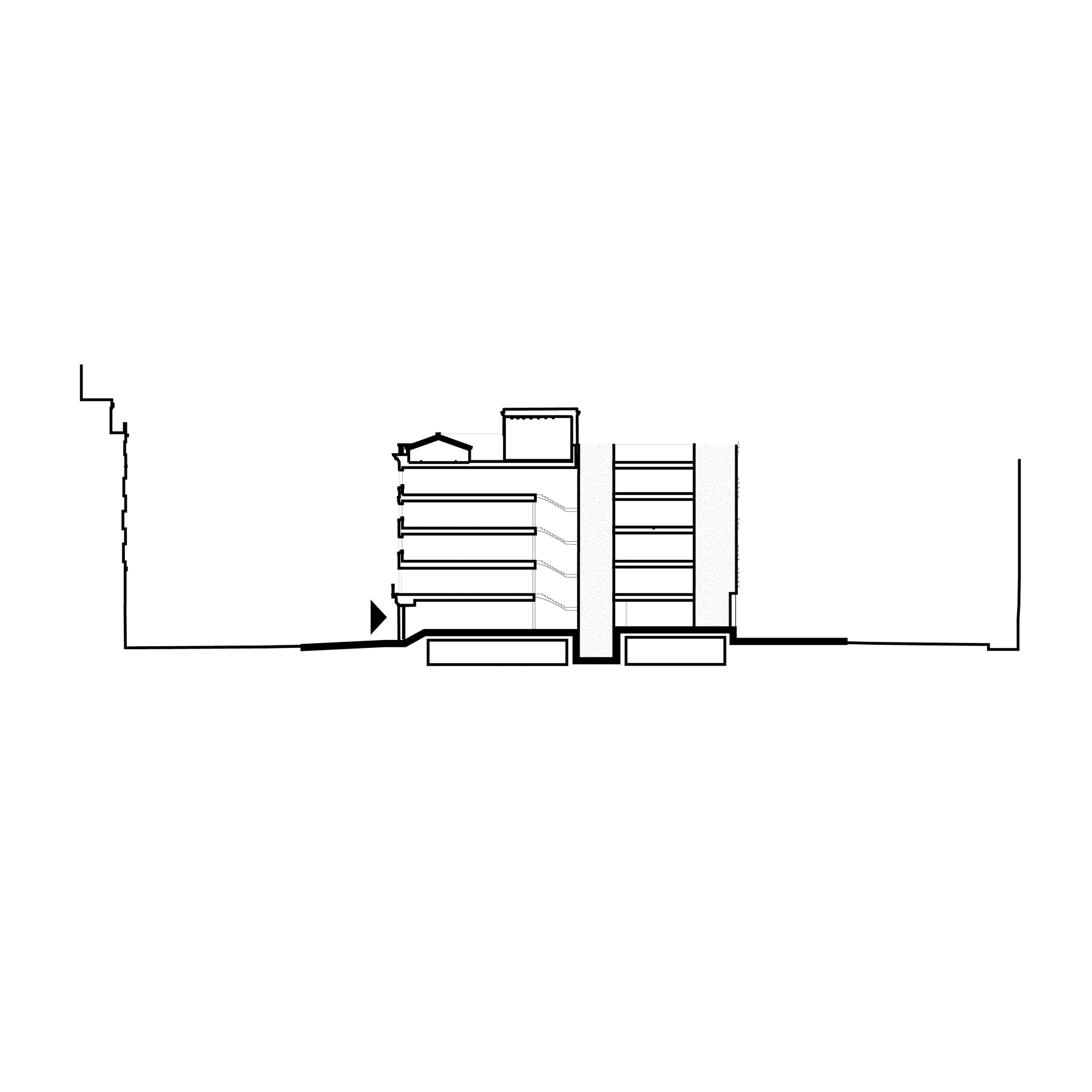
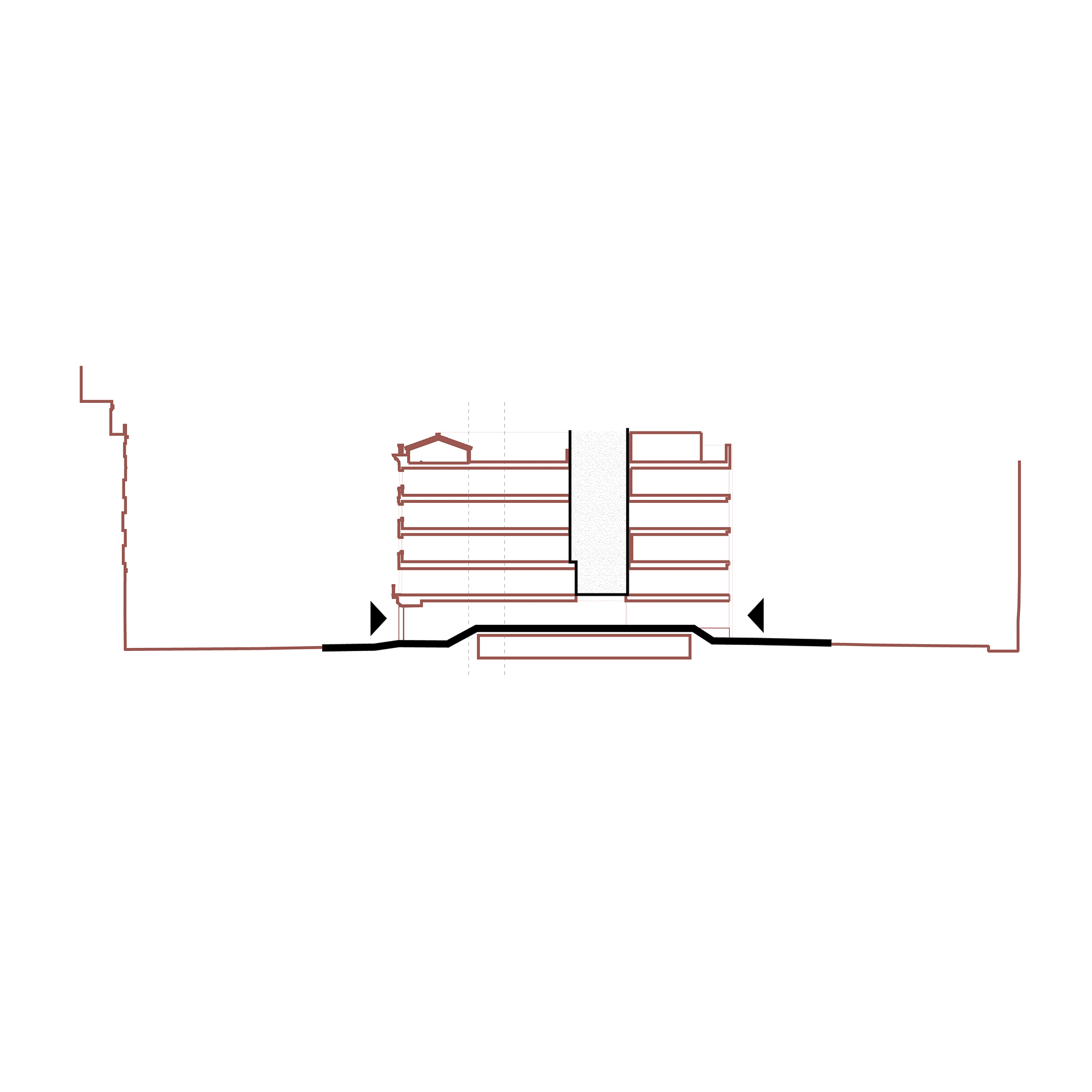
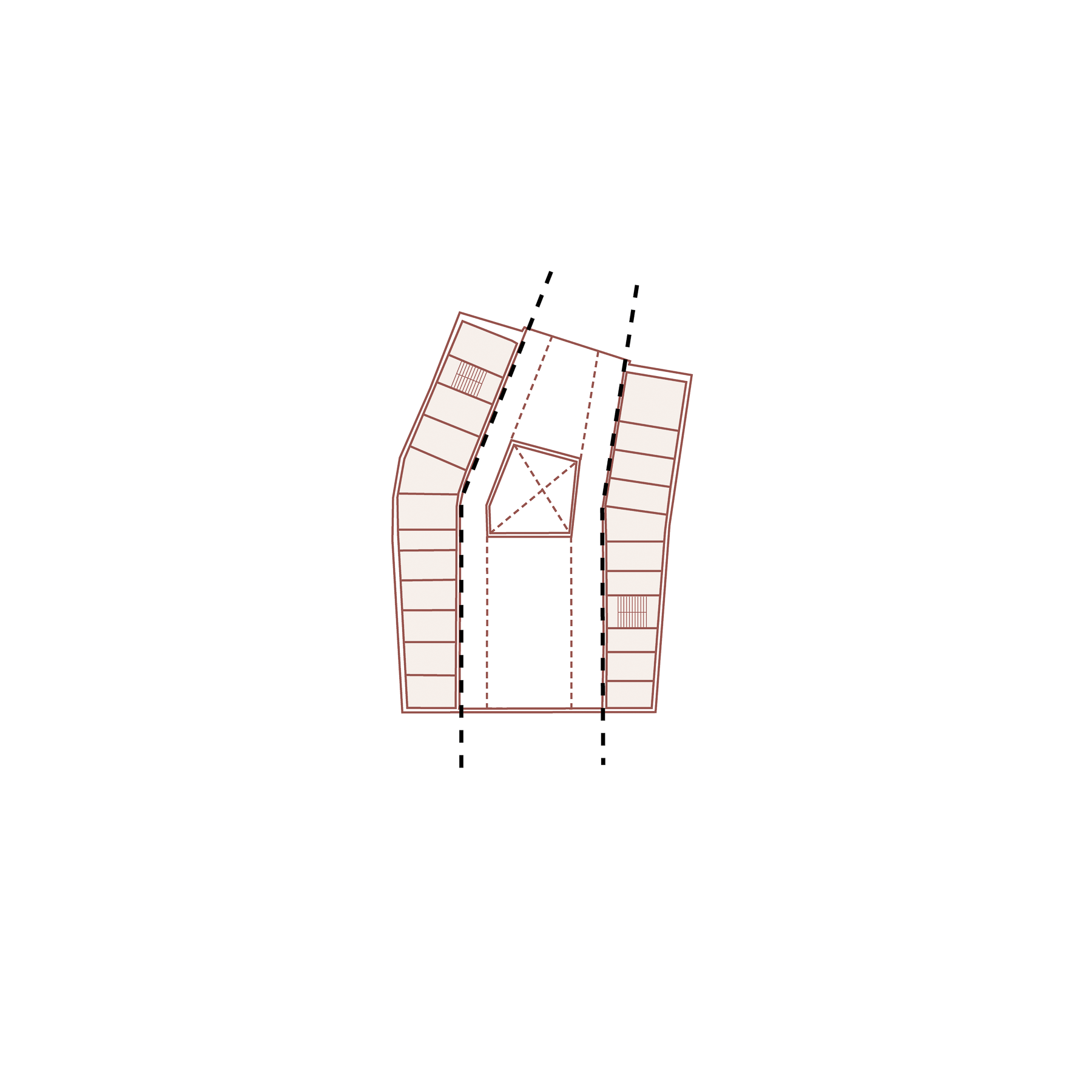
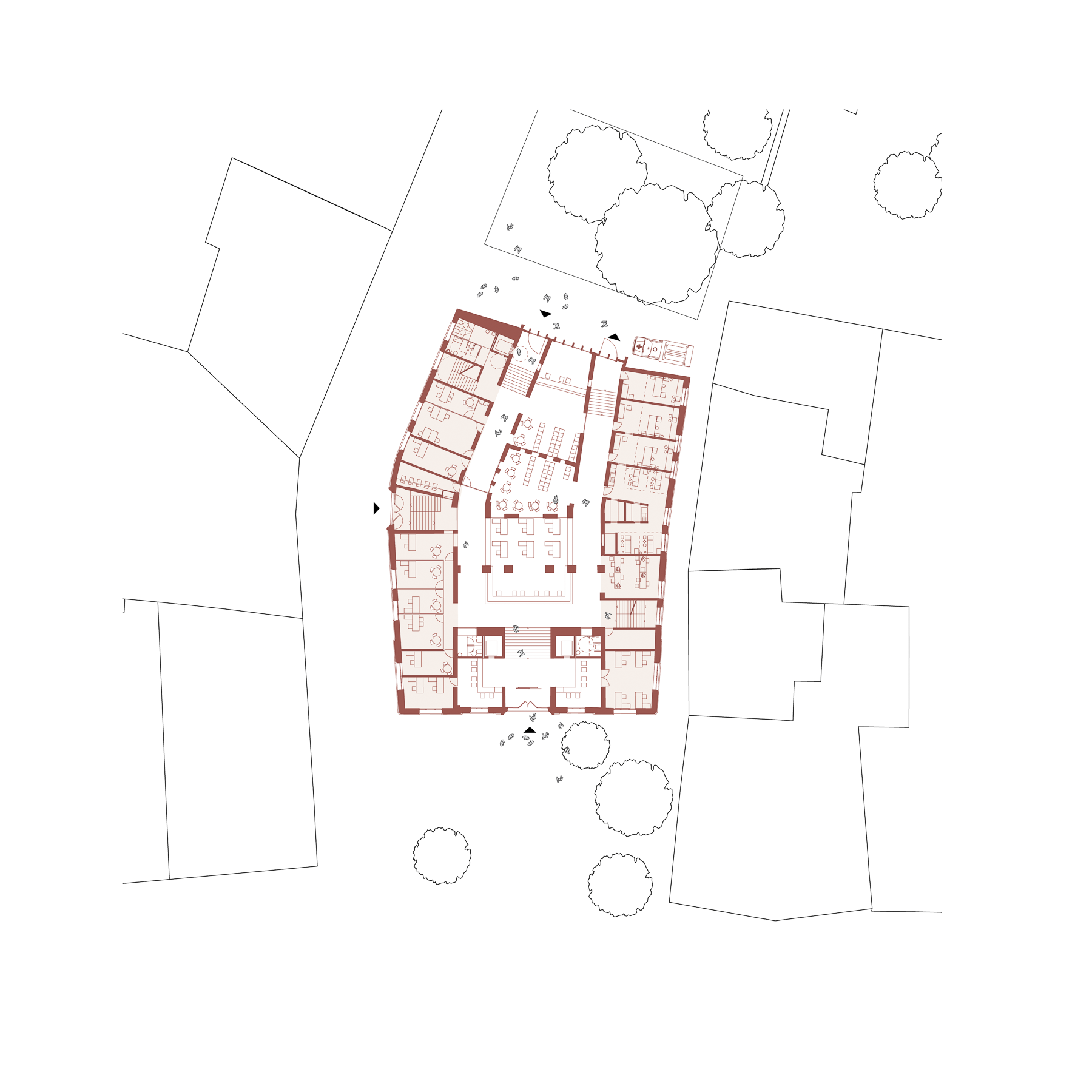
The project for the new Gòtic Health Centre begins with a dual perspective: that of the building and that of the city. The originally unfinished neoclassical building had become an unintended boundary, a wall separating two squares that did not relate to one another. The proposal transforms it into both bridge and filter - an element that reconnects and gives coherence to the surrounding public space.
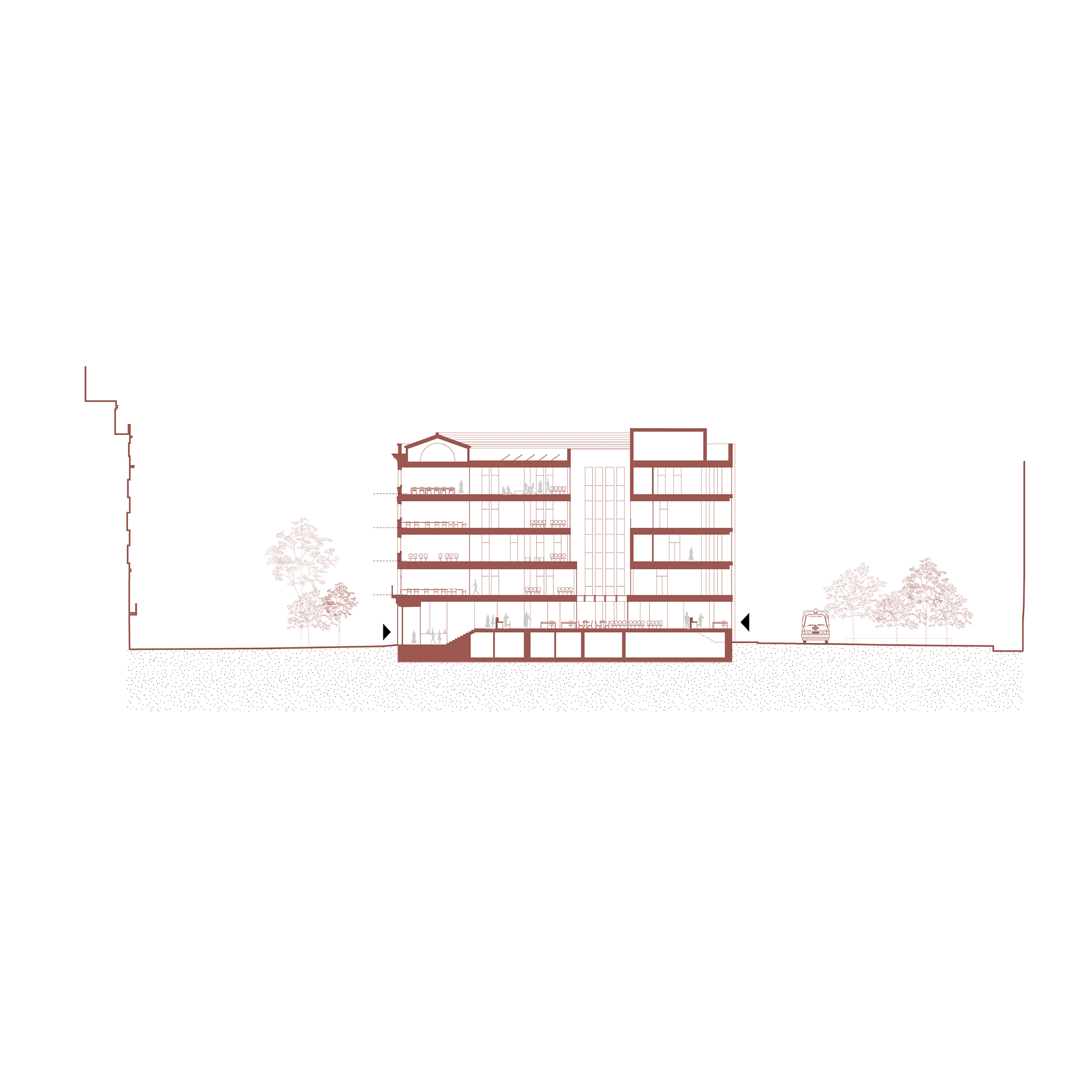
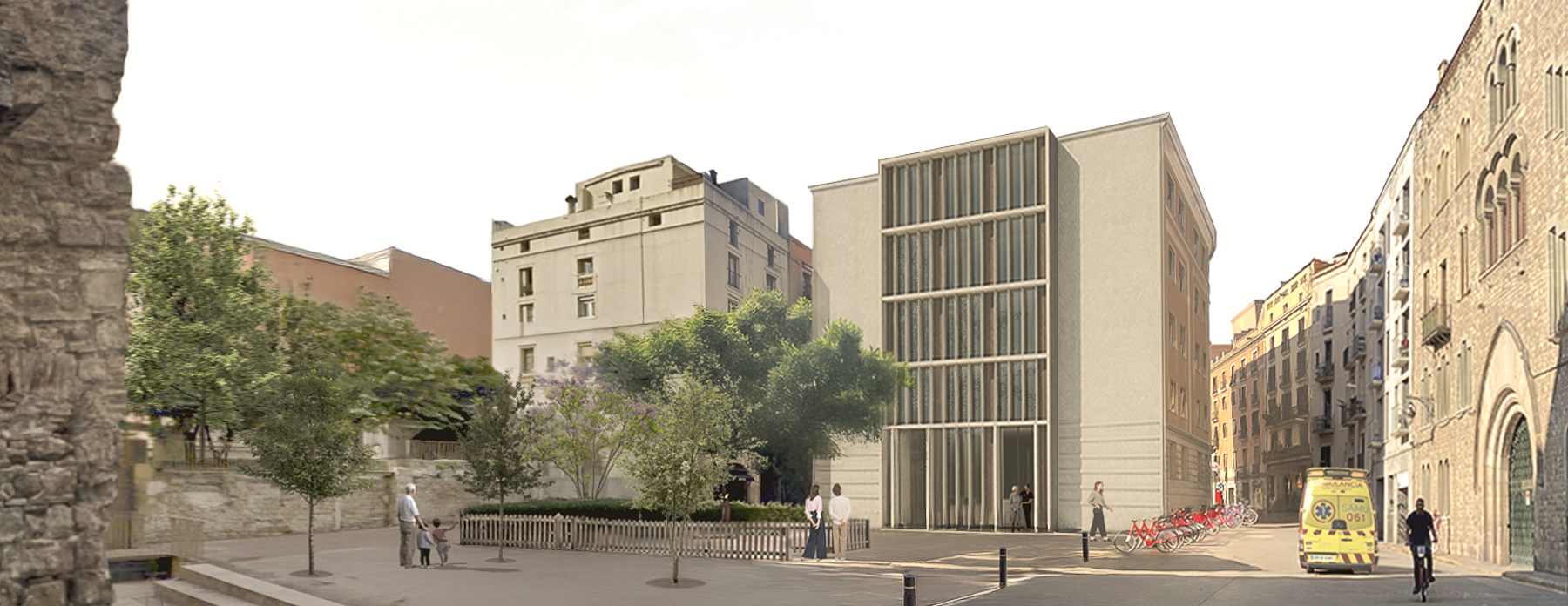
The intervention completes the unfinished volume facing Vuit de Març Square with a new façade aligned with the constructive memory of the ensemble and, at the same time, providing the square with a clear architectural presence. The new built front - composed of two solid concrete elements that dialogue with the original stone, and a central prefabricated glazed volume - follows the modular rhythm of the existing openings and filters light towards the corridors and the central activity rooms.
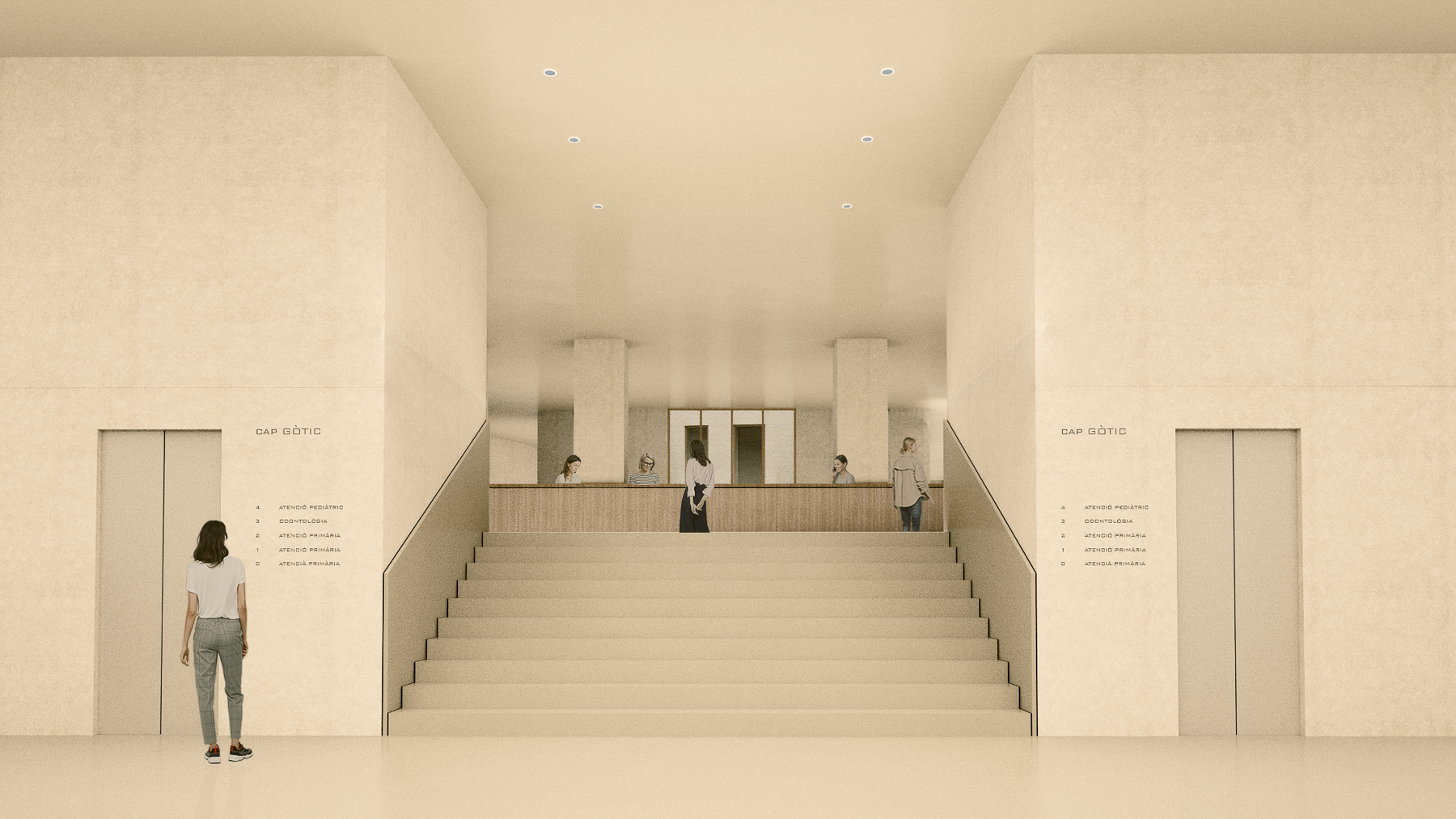
Natural light passes through the building from one square to the other, revealing its new condition as an interior public passage. The existing central courtyard is enlarged and reshaped to function as a lung and communal space, reflecting southern light into the central rooms. Its south wall acts as a light mirror, a vertical surface that captures sunlight and directs it into the interior spaces, turning light into material and the courtyard into a living chamber of air and transparency.
The proposal does not seek to impose itself, but rather to stitch, complete, and give meaning: where there was an ending, it introduces continuity; where there was shadow, it brings light; and where there was a wall, it creates relationship.
This is its defining strength: transforming an unfinished building into an architecture of connection, capable of reconciling the city with its own history.
The intervention completes the unfinished volume facing Vuit de Març Square with a new façade aligned with the constructive memory of the ensemble and, at the same time, providing the square with a clear architectural presence. The new built front - composed of two solid concrete elements that dialogue with the original stone, and a central prefabricated glazed volume - follows the modular rhythm of the existing openings and filters light towards the corridors and the central activity rooms.
Natural light passes through the building from one square to the other, revealing its new condition as an interior public passage. The existing central courtyard is enlarged and reshaped to function as a lung and communal space, reflecting southern light into the central rooms. Its south wall acts as a light mirror, a vertical surface that captures sunlight and directs it into the interior spaces, turning light into material and the courtyard into a living chamber of air and transparency.
The proposal does not seek to impose itself, but rather to stitch, complete, and give meaning: where there was an ending, it introduces continuity; where there was shadow, it brings light; and where there was a wall, it creates relationship.
This is its defining strength: transforming an unfinished building into an architecture of connection, capable of reconciling the city with its own history.